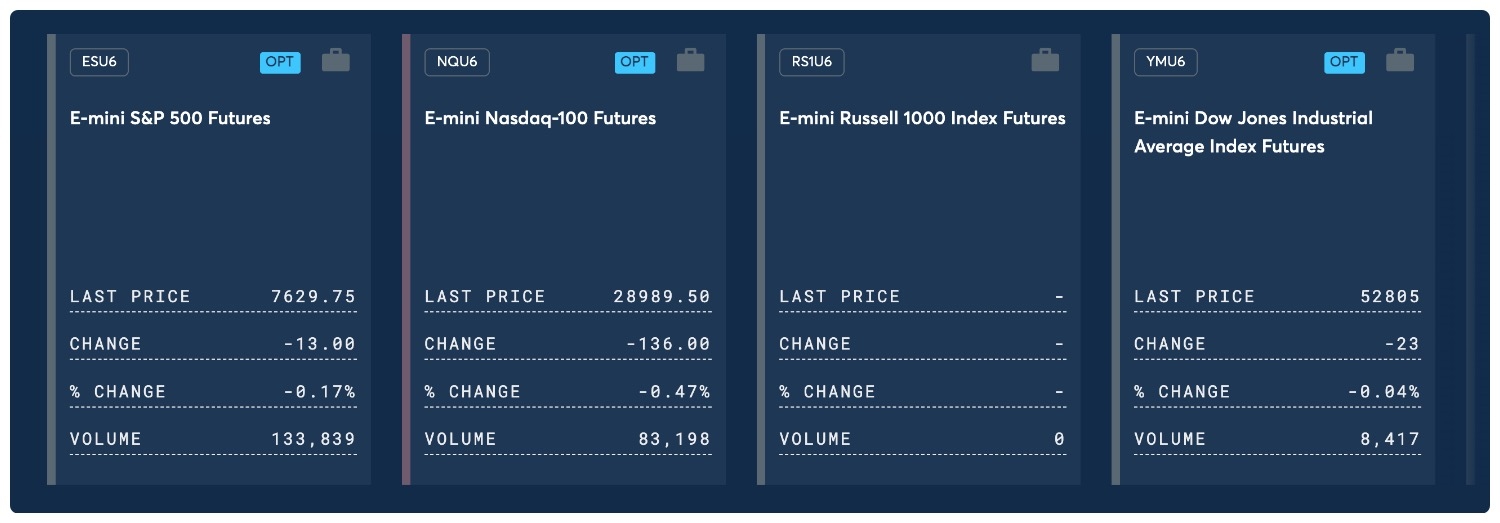
TradingKey - On September 2 Eastern Time, global financial markets continued the risk-averse sentiment from the previous day. Futures for the three major U.S. stock indices diverged in pre-market trading. As of press time, Dow Jones Industrial Average futures were virtually flat, while S&P 500 futures fell 0.17% and Nasdaq 100 futures dropped 0.47%. Rising oil prices and Treasury yields continued to weigh on risk appetite.
[Source: CME Group]
The bond market sell-off intensified further. The 10-year U.S. Treasury yield briefly rose to around 4.81%, hitting a nearly three-year high; the 30-year yield climbed to approximately 5.28%. Japan's 10-year government bond yield rose to around 3.02%, its highest level since 1996, while the UK's 30-year gilt yield climbed to about 5.9%, the highest since 1998.
Crude oil prices remained elevated. WTI crude oil futures rose 5.2% on September 1 to close at $90.22 per barrel; during trading on September 2, Brent crude briefly broke above $95 per barrel. Markets worried that the U.S.-Iran conflict could further disrupt Middle East energy supplies, and rising oil prices reignited inflationary pressures.
Among individual stocks, pre-market performances diverged sharply.
[Source: TradingView]
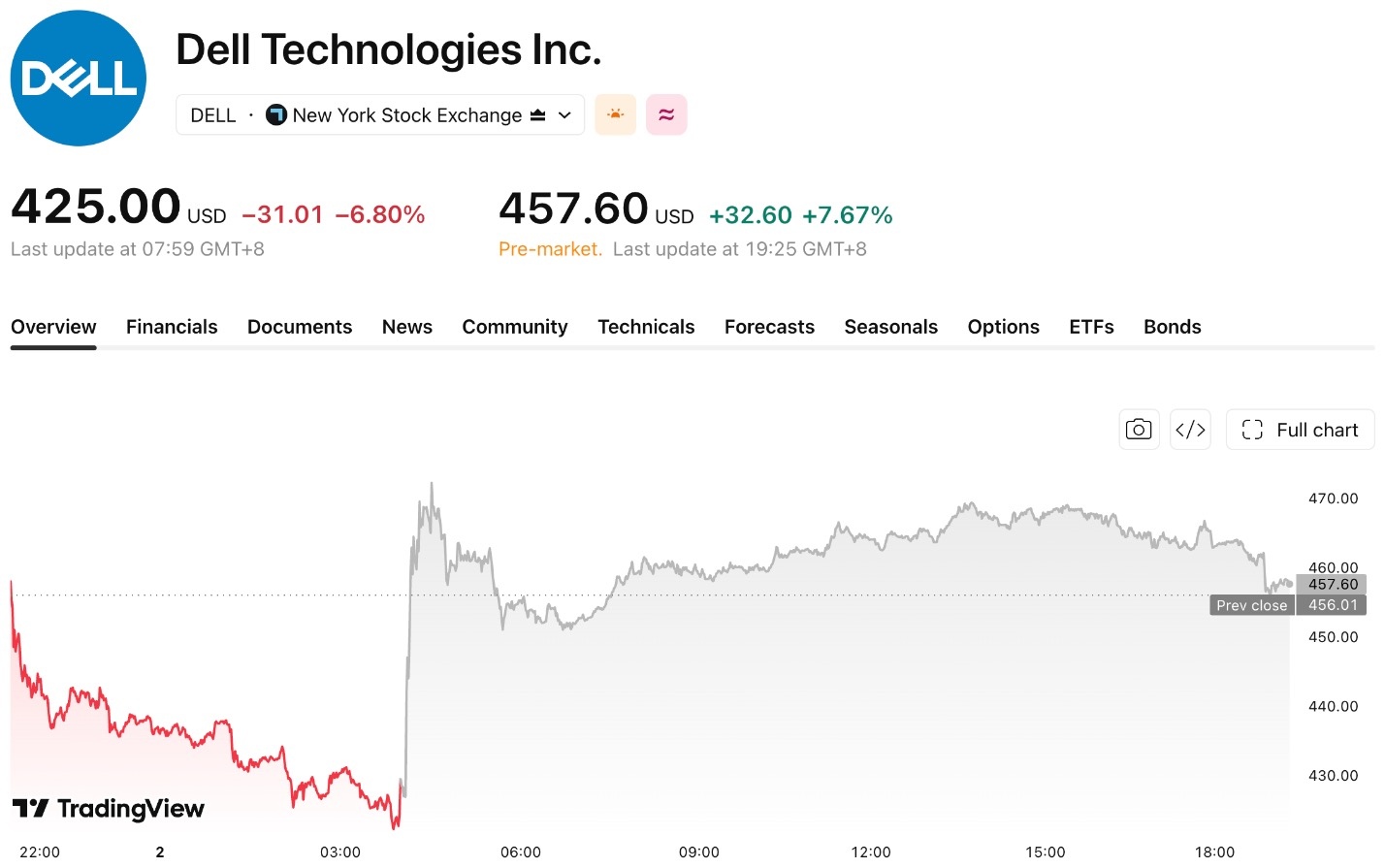
Dell Technologies (DELL) surged nearly 10% in pre-market trading at one point. The company reported its second-quarter fiscal 2027 results after the market close on September 1, posting revenue of $46.97 billion, up 58% year-over-year, and non-GAAP diluted earnings per share of $7.04, up 203% year-over-year.
The AI server business remained the primary growth driver: Q2 AI server orders reached $6.09 billion, and AI server revenue hit $16.4 billion, a 100% year-over-year increase. Dell also raised its full-year fiscal 2027 revenue guidance by $25 billion to $192 billion.
[Source: TradingView]
Credo Technology (CRDO) reported first-quarter fiscal 2027 financial results showing revenue of $479 million, up 114.7% year-over-year, and non-GAAP diluted EPS of $1.20, both beating market expectations.
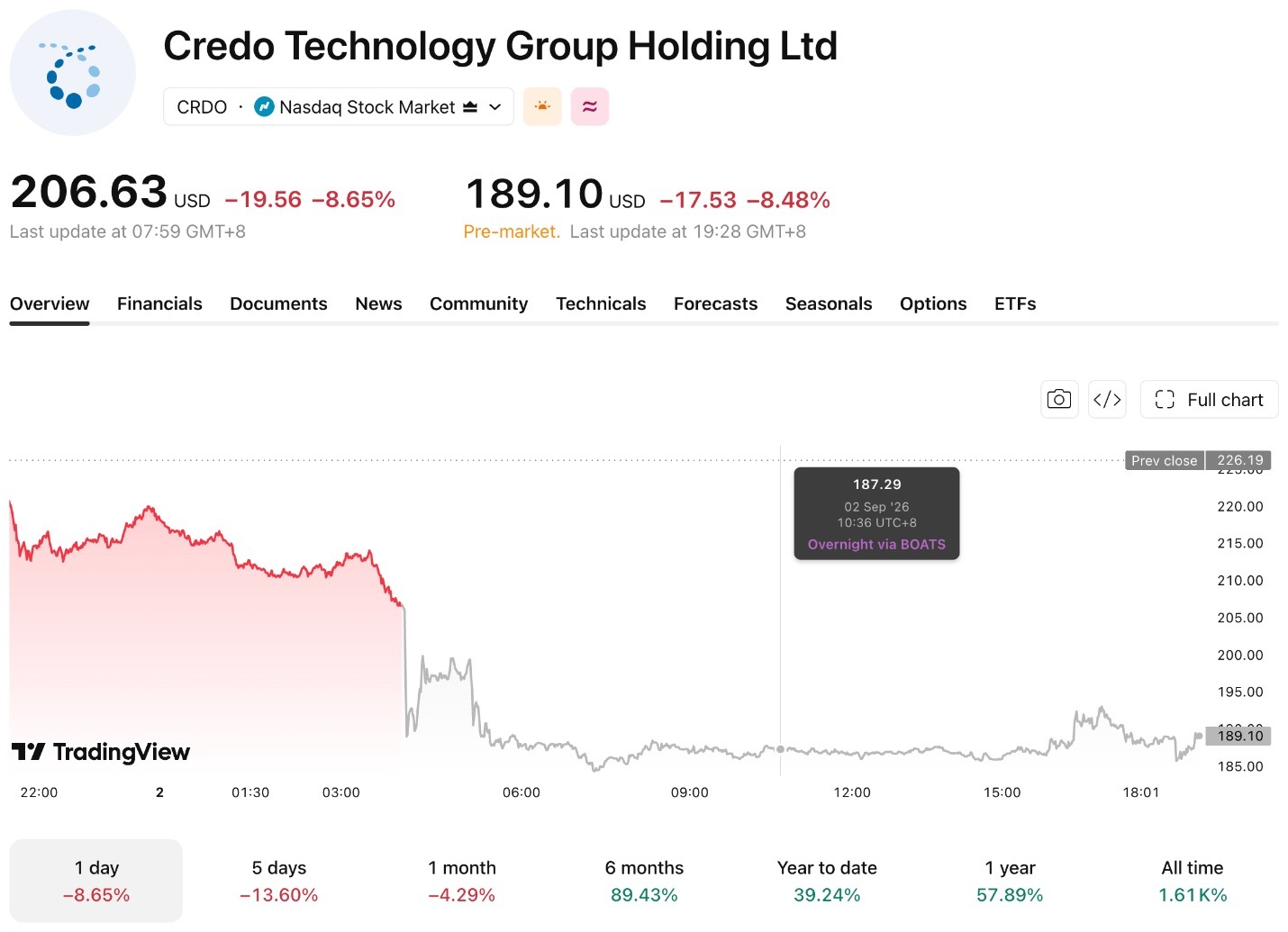
The company expects second-quarter revenue to range between $525 million and $535 million. Despite the strong performance and guidance, Credo's stock weakened significantly in pre-market trading on September 2, extending the previous day's decline and falling more than 9% at one point.
[Source: TradingView]
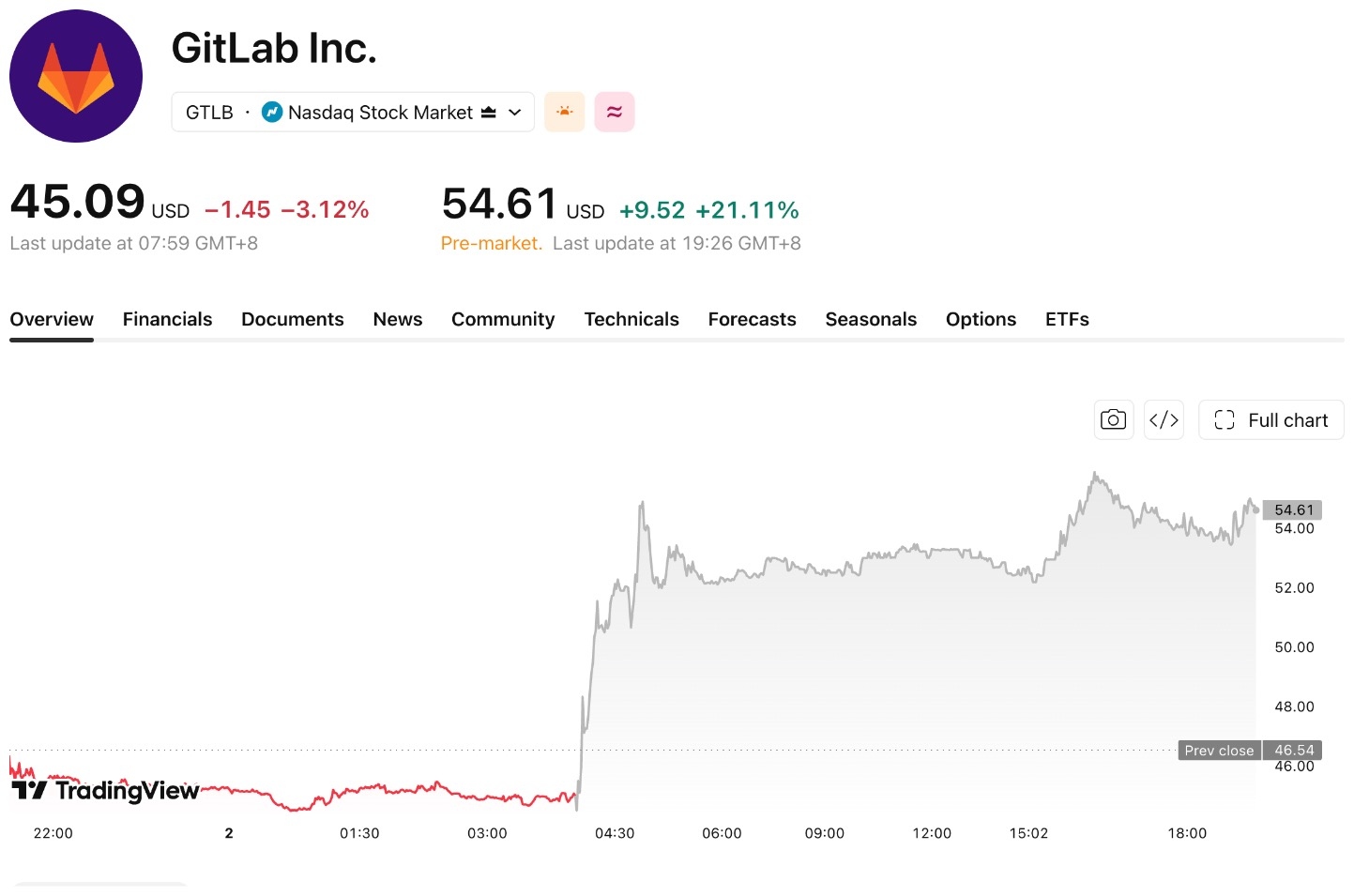
GitLab (GTLB) jumped more than 23% in pre-market trading at one point, becoming one of the strongest performers among tech stocks. The company's second-quarter fiscal 2027 revenue reached $286.3 million, up 21% year-over-year; net ARR grew 42% year-over-year, and its dollar-based net retention rate (NDR) rose to 117%. The company also raised its full-year revenue guidance to $1.129 billion-$1.133 billion.
In addition to tech earnings reports, defense contract news also drew market attention. The U.S. Army announced it is advancing the TITAN program to full-rate production, awarding orders worth $127 million and $65 million to Palantir (PLTR) and Anduril, respectively, totaling $192 million.
The contracts cover eight initial production systems, including four TITAN Advanced and four TITAN Basic systems, scheduled for delivery over the next 18 months. Despite the major positive news of defense mass production, Palantir fell over 1% in pre-market trading as of press time, failing to buck the downward trend.
The U.S.-Iran situation remains the core variable for current markets. After the U.S. launched a new round of airstrikes against Iranian military targets, Iran retaliated swiftly, leaving energy transport through the Strait of Hormuz and the Middle East at risk of further disruption, keeping oil prices elevated.
On the second trading day of September, geopolitical conflicts, rising oil prices, and higher U.S. Treasury yields jointly weighed on risk assets. Although strong earnings from tech stocks such as Dell and GitLab provided support to specific shares, their lifting effect remained localized under the current macroeconomic environment.
The market's next direction will depend on whether the U.S.-Iran conflict escalates further, how long oil prices stay elevated, and whether upcoming U.S. economic data can relieve market concerns over inflation and interest rates.
Find out more